Showing posts with label Burundi. Show all posts

Monday, 3 May 2010

"The Heart-Shaped Land"

21st-24rd April – Days 204-207 – Bujumbura, Burundi

To be honest, I had no idea of what to expect from Bujumbura. I also had little idea of what to expect from Burundi, aside from the fact that it was green and mountainous. The ride up from Mabanda was among the most impressive we've had on the whole trip – through mountains of a deep green (and for the first time in a while, we actually had a tarmac road so we could enjoy what was around us instead of concentrating on not hitting heads of roofs!!) and small villages before dropping down to Nyanza-Lac where we got onto the road along Lake Tanganyika to Bujumbura. Burundian mountains on the right, Tanganyika and mountains of Congo on the left – the view for those 3 hours was far from terrible.

Burundi, I think, comes top of the “countries in which we get the most attention” list as well at the moment – in Mabanda we had been left alone for a few minutes by Hasani and his friend as they went into a shop and during this time a crowd of no less than 20 people had gathered, watching us have a chat with the guy who dared to talk to the wazungu first. On the ride up to “Buja”, the normal tidal wave of food sellers would calm rapidly as soon as someone spotted us sat in the back – half would then continue selling and the other half would just looking through the window and talk to us in Kirundi. It wasn't hostile at all and everyone was very curious, but I'd imagine similar scenes if a minibus pulled up to a town in Europe with a rare species of unicorn in the back. There's not much to be done except to smile and wave and pick your brains in vain to try and remember words in Kirundi that you never learnt in the first place, but there we go. You get used to it.

Generic Buja street scene #888028336739

We arrived in Buja late morning as Hasani set about trying to find his brother (or at least it was a guy who he called his brother - “he's my brother but we don't have the same parents” - we only managed to ascertain that this guy was some kind of distant relative) and eventually we ended up sat in said brother Feruzi's front room, being eyeballed by his very young daughter and being greeted very warmly by his mother (in Swahili of course). After Hasani and Feruzi had had a bit of a chat, they called up a taxi and took us half way around the centre of Buja looking for a hotel which was up to (or rather down to) our budget. It's not a very cheap city when it comes to sleeping but we ended up at the Saga Residence, right in the centre, for $25 a night. No hot water but in a city as hot as Buja, who cares about that? We did get free wireless to compensate, plus a bar that served one of those huge 72cl bottles of Burundian Primus beer. We promised to get in touch with Hasani at least when we got to South Africa, if not here in Burundi. We didn't really want to intrude on his reunion with his family and country so we just sent him a text message when we'd got a Burundian number. The message was never delivered and so we left it at that, resolving to call him in a few months in Cape Town. And so there we were, alone in Buja!


The ferocious streets of Buja did not eat us alive, as predicted


Our faithful companion in Buja...

The city itself is nothing like Kampala or Nairobi or Dar es Salaam – not many glass towers or modern soulless buildings here – apparently because the war, which ended just a couple of years ago, stopped any kind of “development” happening. We didn't mind at all – Buja probably looks quite similar to how it did 60 or 70 years ago (aside from the streets full of 4x4s and the occasional swanky nightclub with plasma TVs on the walls, obviously) and it's a great place to walk around, taking in the history. One block away from us was a place was a place called “Aroma” which we went into and sat down. “Oh my God!” cried out M in an excited voice. “They have real coffee! AND crepes! AND ICE CREAM!!”. I knew immediately that we'd spend a fair amount of time there. With this simple gesture, Buja endeared itself to M even more. I was already a convert. Even before the end of the first day, I was starting to regret that we'd only had a short while there.

Unfortunately we're not only here for pleasure – other business has to be taken care of so we spent the better part of the one of the days updating the blog, sending and reading emails which we hadn't taken care of for a while, preparing to M's parents visit to Zimbabwe, repairing broken clothes (again) and so on. Whenever we tried to do something more ambitious, it failed – our attempt to get out of Buja to the city of Gitega was foiled by us getting up too late, as we found out that the last buses leave back from Gitega early afternoon and it was already 11.30am. So we abandoned that. Taking pictures wasn't always obvious either, as we discovered on the main square, Place de l'Independence. It seems that Buja hasn't succumbed to outright selling off of all land for high-rise buildings and the central square features an independence monument and a large well looked after park. We'd just snapped a few shots when we were approached by a policeman who greeted us, enquired politely about our health and then asked if we had a permit from the Interior Ministry to take pictures in this area. We didn't we told him, and we didn't know that we needed one, and that we were tourists, you see, and that we'd only been in Burundi for two days so we didn't know the rules yet. “Only two days?? Tourists??” he said “OK! Well then don't worry about it. Come over here, you can get a picture of this monument from a nice angle...”. All was well that ended well. He told us that a permit was needed to take pictures of any “lieux publics” or public spaces which was be loosely interpreted to mean squares, public buildings and the like, although he assured us that just taking pictures in the street was OK, and that we should enjoy our stay in Burundi. We promised him that we would, and that we'd be careful about where we took our pictures.

The forbidden (but not really) picture


While the cheeky model celebrates getting away with permit-free photography

Fortunately, we're also not only here for business and hardcore touristing, and we compensated for our walking around and not following photography rules by refreshing ourselves in a few different places. In one, we had cold Primus in a garden a few metres from the edge of the lake, listening to the hippos grunting loudly from the nearby reed bushes (which should have been slightly concerning but somehow isn't any more. We've become indigenous I suppose).

I tried to snap the noisy hippo but it didn't want to come out and play for some reason...

In another, we took a taxi driven by a guy who was probably quite drunk (not that he smelt it or really looked it – just slurred quite a bit and had a penchant for driving on the wrong side of the road when the fancy took him), and went to Saga Plage at the northern edge of the lake. In proper beach resort style, we sat in a cafe/bar on poles over the water, looking down on the view of the two neighbouring countries and their mountain ranges, and sometimes scrambling to pick up our stuff which had been blown off the table by the strong wind. Buja was definitely a sitting on terraces kind of place.

We also had company on that evening in the form of Pastor Frank from Kabale, who'd come down for the weekend on church business and so we were only too happy to finally get him the drink we'd offered him! He told us that he was a day late as he'd been spotted giving a sermon in Kampala by a priest from Kisangani, in Congo, who had recognised him from a previous sermon he'd seen in Bujumbura some time before, and Pastor Frank had invited the guy over for dinner. As the guy arrived, Pastor Frank wasn't home and his wife opened the door, and the two realised that they were long lost relatives! As such, an impromptu family reunion took place. “As a Christian, I believe everything happens for a reason” he said.

Left to Right: Burundi, Lake Tanganyika, Congo

We also ate skewered meat and good chips for the first time in a while. The lingering effects of colonialism are clearly seen in the chips when you cross from ex-British Tanzania (warm soggy chips served with cheap ketchup) to ex-Belgian Burundi (hot, crunchy and served with mayonnaise), spent time sitting around in “Aroma”, M's favourite coffee shop and the Centre Culturel Francais's good (and surprisingly efficient) restaurant/cafe/bar. That's the kind of time we had in Buja. Much walking, much relaxing, nothing in particular done but lots seen. Exactly the way I like it!

The CCF at night. Buzzin'.

Finally the morning came when we'd have to ship out of Burundi and try to get back to Kigoma. I was sad to leave and I'd love to come back to Burundi some day, to spend more time in Buja and also to see some more of the country. For now, though, we had two major challenges – firstly, get out of the country with our dodgy visa and (more difficult) find a Tanzanian dalla-dalla which wouldn't break down on the rough road between the border at Manyovu and Kigoma. First up was a little session to put things in perspective – we came up a hill to a sharp bend where a minibus coming the other way had completely flipped onto its roof, which had caved in and all of the windows had blown out. Another minibus had arrived straight after and its passengers were out on the road, and people from the area were probably standing around too, so we weren't sure who had been in the flipped minibus, although M's first reaction of “is everyone alive??” sums up how serious this crash looked. Our door was flung open and a guy climbed in with his arm covered in blood although – call this the African spirit or stoicity or whatever you will – he was still blabbering with the other passengers as if nothing had happened. As this was happening, M said “hey... isn't that Hasani?”. I looked around and it was, called to him and he seemed as happy to see us as we were to see him! I asked straight away if he'd been in the crash. “No, I'm very lucky to be in the other one. I was supposed to be in that one though – just that I was late to the station, so I just missed it”. As Pastor Frank would say, everything probably happens for a reason.

Running the immigration gauntlet after all was simple – M went first and was interrogated a bit about why she overstayed her visa, which was eventually sorted out after she pointed out that the visa was valid for one month and not for 3 days. Sometimes I have to wonder who actually trains these people – their job isn't all that complicated but they manage to get confused with impressive regularity.

The final glimpse, for now

And the dalla-dalla didn't break down as we bounced over the road back to Kigoma, even if we changed a tyre for a reason I couldn't manage to work out. With the sight of the crash fresh in my mind, I suddenly didn't mind the state of the Tanzanian roads and dalla-dallas so much.

Thursday, 22 April 2010

Blagging it into Burundi

20th April – Day 203 – Kigoma, Tanzania to Mabanda, Burundi

After having a day of African bus travel such as the one we had had on the way down to Kigoma and knowing that you are most likely facing another very similar day, I found myself surprised at how perky I felt in the morning. The sun was shining brightly, I could hear people talking in amicable tone while strolling along on the small alleyway right outside our window (one of them in clear native British accent) and the hotel staff was in a very friendly and helpful mood – it was just one of those mornings when you wake up feeling like anything is possible on that day. And this kind of optimism or good karma (whichever you want to call it) was very welcome today as we would be trying to get to Bujumbura by nightfall.
I started the morning off by getting out of bed to look for some breakfast in order to take my anti-malarials that I hadn't wanted to take the night before into an empty stomach (as no opportunity for buying food really emerged during the long bus journey down to Kigoma and most certainly not after our arrival at 1am either). I found my way to sharing the table with the locals at one of the lodges close by and had the classic swahili brekkie of two mandazis, a chapatti filled with an omelet and a cup of tea. To top it off I bought a mango juice on the way back to the hotel where T was still dozing in deep sleep. We got our bags together, left one of them and all the camping gear we were not presuming to need in Burundi behind at the hotel and made our way to the unofficial minibus hangabout.

The hunt for the minibus to the border town of Manyovu started well as we found touts for the destination immediately after walking to the scene, i.e. a congregation of dalla-dallas and various market stalls behind a petrol station off the main road. We sat down into the bus where a few souls were already fading away, crammed our bag in and waited. The touts at this particular stop were not the most enthusiastic I've seen on this trip and it took over two hours to fill up the Hiace, making a new record of 23 people inside the vehicle at a time on this trip. It was already noon Tanzanian time (11am Burundian time) by the time we headed off.


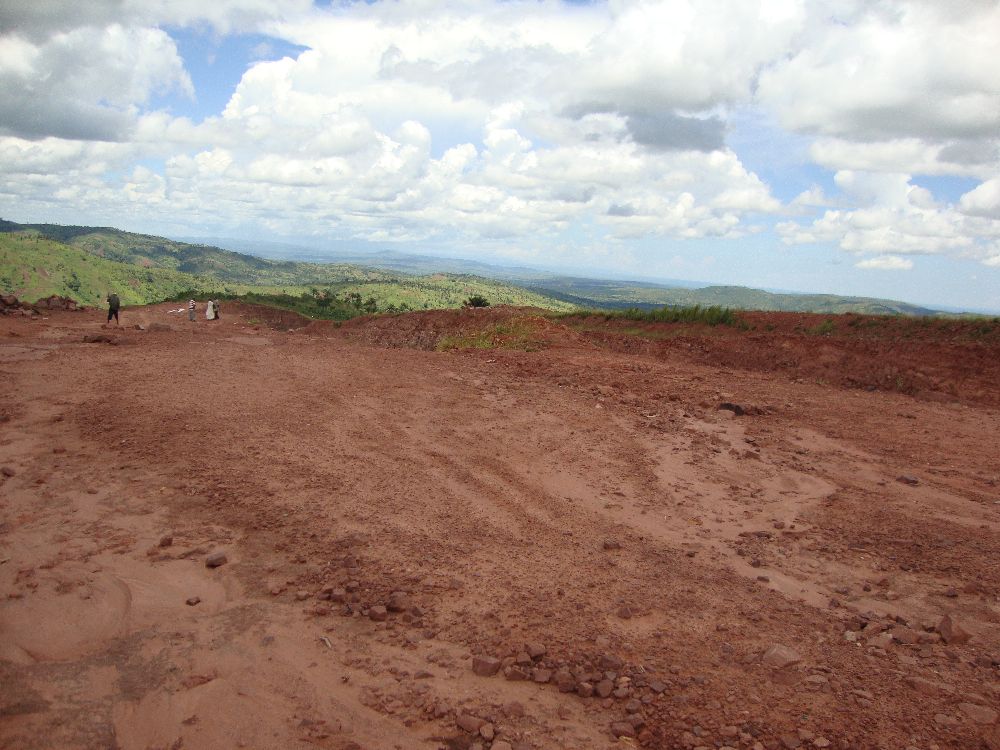
We didn't get far before we were all told to get out and walk up a hill which the minibus couldn't make due to being old and overcrowded. Less than half an hour later we were courageously taking on another gravel uphill, albeit a much gentler slope, when the Hiace gave up the ghost. Us passengers clambered upwards the hill for a bit in hope of the driver and his tout friends fixing the problem and catching up to pick us up again, but even after an hour the Hiace hadn't made a sound. So we clambered down the hill back to the Hiace to interrogate on the situation and we were told someone was coming to have a look at the vehicle. A fellow passenger who we, in our usual fashion, had nicknamed stripy-shirt man started a chat with us about the perils of travel in Tanzania and it turned out he was a Burundian guy on his way to Bujumbura as well. He currently lives in South Africa and drives a truck there, and has also lived in Tanzania and driven around Southern Africa quite a bit so he had many interesting stories to tell. This was also his first trip back to Burundi to see some family that remained there since he fled from the war 15 years ago at the age of 15. We passed the time in good spirit with him, having him translate to us what was going on too. The place where we had got stuck was a track that lined an upper bend of a newly dug but rudimentary road (or trench, that's how deep the passage was) built by the Chinese. Some vehicles passed by lower on the newer tracks and our friend and some other passengers yelled down to ask if any of them could take some of us on. We had no such luck but were instead plied with bananas from one of the trucks transporting them to Kigoma. Not long after this fruit lunch, and a little more than two hours after we first broke down, a mechanic arrived on another vehicle and got the Hiace running again in less than 10 minutes. How it looked to us, it had just run out of oil and hence the engine had cut out but I won't start speculating on the technical skills of the driver and his touts without better knowledge.


"We could have broken down at a worse spot" we both concluded.


M draws figures in the sand while Hasani inquires over progress with the Hiace. Busy times.

The Hiace sounded much healthier in any case and we bounced happily all the way to Manyovu, from where we took boda-bodas to the border after a slight debate between me and the drivers over whether two people and a big backpack can be fitted on one single boda-boda or not. We have done it before on this trip and I insisted we follow the same pattern this time around as well, but the drivers insisted back that it was against the law and that they were the type to follow the law in this town. That would certainly make this town the first and only of its kind in this sense, but as there weren't really any actual taxis around I guess the boda-boda guys could afford to follow the law here. We got on two boda-bodas in the end as the market forces were clearly against us and the other choice would have been to stay and argue the toss until the border closed. Our Burundian friend had smiled at my desperate bargaining attempt and hopped on a boda-boda of his own already 10 minutes ago, so we also had an interest in catching up with him to share transport on the Burundian side of the border.

The Tanzanian border we swept through no problem, as with the pretty little forest in between the border posts in the afternoon's setting sun. At the Burundian border our passports went through a very thorough search by the official who announced there was a problem with the visas.

Let's explain the background a bit first shall we. When we had got our passports back from the embassy in Kampala, there were these tiny little streaks of ballpoint pen over on the word 'avant' (=before) on both of our visas in the part of the visa where it says “Premier entrée avant le date ….” (or “First entry before the date...”), in our case this date was April 15th. We had been asked on the visa application form about the intended date of entry into Burundi and we had put April 15th on there, so we had taken this to mean that the officials in the Burundi embassy had stroke off the 'before' as a result, meaning we could enter anytime after the 15th. However, just to be sure that this is how the border guards would understand it as well, we decided after some hesitation that we should maybe reinforce the streaks a bit. So T had painted over the streaks with some more ballpoint pen already in Kampala, only unfortunately the shade of blue on our pen was slightly lighter than the one used by the Burundian embassy in Kampala on other parts of the visa.


Our little work of art.

So, today at the border was April 20th , and the border guard was looking at our “entry before” part very suspiciously. He interrogated us on why the word 'before' had been crossed out and stated, very rightly so, that the colour of the pen was different from the other writing on the visa. We answered that this was how we had received the visas from the embassy in Kampala (which was true in part) and that we had wondered about it ourselves as well and explained that we had been asked about the intended entry and hence with all logic it should make sense that they strike out the word 'before' exactly because we were not intending to get to Burundi until on the 15th or later. The border guard wasn't too impressed with our explanation and started pointing out instead that the visas had been issued on April 1st and therefore it would make sense that you should enter quickly, i.e. before the 15th. We dug out the phone number of the Burundian embassy (which had been given to us when we applied for the visas so we could call them up to ask about how the application process was going) and gave that to the border guard to call for himself to check with the embassy. This was obviously a slight risk because of course we couldn't be sure that the person who had issued our visas would confirm that there had been any crossing of the word 'before' in our visas in particular, either because they had exactly wanted to leave it unambiguous on purpose or simply because they would not even remember that they had crossed it out in the first place. We thought, however, that if the worst comes to the worst then at least they really have our application forms at the embassy with clear evidence on that we had intended to enter on the 15th or later. Either way, the risk was in the different shades of blue. The border guard wrote down the phone number but didn't call the embassy on the spot. He stamped our passports in for the entry, said that he would be contacting the embassy later and told us that we would have to go and extend our visas in Bujumbura in any case after three days, with additional payment of course. We insisted back yet again, pointing out that the visas had been granted for one month's stay. He didn't insist back on this issue but instead asked where we would be exiting the country and informed us that the emigration post for the same border crossing was in the town of Makamba instead of here at the border. We thanked him for the info, grabbed our passports, quickly changed some money outside, got into the taxi where our Burundian friend was waiting with some other people and drove off. We knew there was very little chance that the border guard would actually call up the embassy in Kampala, but if he did we might be in for some decent trouble on the way out. We started considering our options of exiting through some other border, hoping that the information would not travel too far.

The drive to Mabanda, the first town north of the border left all of us “foreigners” speechless, T and I because it was so beautiful and our Burundian friend Hasani (we finally got introduced formally in the car) probably because it was a very emotional moment for him to be back after all this time. Driving off from the border we saw mountains with their tops covered in the mist, sunlight beaming through somehow from the outlines. The hills and valleys in between were deep green and the road even more rusty red than those of Northern Kenya, the reddest we had seen so far on this trip. The mist made it rather eerie, as we couldn't see further than 10 metres at times once we had climbed up high enough, but it made it all even more exciting. Burundian people on the sidelines of the roads and in some small villages we drove past stared at us flat out and gave some blunt-sounding comments that we couldn't understand. A woman and man who were sharing the ride with us were talking during the most of the ride and the speech was loud, sounded very aggressive and altered in tone spontaneously. Our driver also had some character which he spilled out from the window at just about anyone who offended his driving space. Trying to interpret what was going on behind all these words I could not understand, I still sensed there was goodwill in it all, a rough and ready approach to things with some rowdy humour. I take it that is something you cannot survive without in a country recovering from decades of civil war and sporadic conflict.

We got some more examples of this in the town of Mabanda where we arrived in the early evening. We would have to spend the night here as it was too late to get transport onwards to Bujumbura. We arranged a minibus for the morning and signed in at the Hollywood motel before heading out for a dinner of nyama choma and chips at a local eatery/bar. There a drunken man sat down to our table, “Mzungu!”ed us for a while and proceeded to help himself freely to chips and meat from both mine and Hasani's plates after we refused to buy him a beer. It was done in the kind of humoristic bully attitude, clearly not wanting to offend us too much but also setting us right in our place. This got him some chuckles from the other customers at the bar as he showed off his munching to the crowd. Hasani took this very calmly whereas I loudly announced the man to be a thief and pulled my plate out of his reach in equally humoristic yet strongly “I'm not taking just any crap from you either” attitude. More chuckles followed. Sometimes it's good to be a woman in this respect, as you know you won't get into a fistfight even if you step on someone's toes without really knowing how they will react. After all, he had himself claimed I was pretty earlier so it would be a shame for him to smash my face in over a few chips, now wouldn't it?

Back at the motel, we both had ice cold showers to rinse off the rusty red crust from our skins and hair. Hasani went to see Inter beat Barca at some bar but we were too tired and just had a quick beer at the motel bar with more drunken chat from the locals. T said it reminded him of Finland and I laughed thinking that's probably why I feel at home here with the strong-minded but kind-hearted drunkards.


The bar at Hollywood Motel, Mabanda. It's too early for beer at 6am, boys!