Showing posts with label Tanzania. Show all posts

Friday, 18 June 2010

Bump

25th-30th April – Days 208-213 – Kigoma to Mbeya, Tanzania

A familiar sight over these days - the inexplicable stop in the middle of nowhere

The long and dusty overland ride towards Malawi and T's parents started the next morning from Kigoma from where we took a minibus to Kasulu. In Kigoma we'd inquired about the boat option down the lake to near the Zambian border and about the trains going inland but neither one of these were running that week. The trains would be operational again starting from May 1st we were told, even if at the same time the men at the train station said that the reason the trains weren't running was because the tracks had been damaged by floods in no less than 175 places. Granted, they never told us May 1st on which year they meant. So, we were left with the bussing it down option, and during another round of inquiries in Kigoma we had found out that the buses down to Mpanda and further all depart from Kasulu, a junction town a couple of hours way inland from Kigoma.


On our way to Kasulu we encountered a bizarre, to us at least, sight: an African tourist. He came from Kigoma and he had a camera hanging from his neck in classic style as well and wanted us to take a picture of him, which T kindly delivered. We never really found out where he was heading but doubted he would be going all that far, judging by the way he had virtually no luggage. But the effort and attitude were there and it made us smile.

Kasulu Towers

In Kasulu we encountered another bizarre sight: a poshish hotel by the side of the main road, which in Kasulu means your average red dirt lane. According to our info gathered from Kigoma there would be a bus to Mpanda the next day so we'd need to stay overnight, hence we thought why not try this shiny thing. Prices weren't too offensive so we could afford one night. After some lunch at their terrace restaurant, we headed out to buy the bus tickets for the next day but came back later with an agreement to be picked up by a 4x4 the next morning. As it had turned out, the next bus wouldn't go until Saturday after all, and it being Monday on that day we just didn't have the time to wait. But after some desperate attempts at asking around in Swahili we had found someone who understood enough and took us to the 4x4 driver.

The now traditional flat tyre

The drive to Mpanda was very nice and smooth for us, as far as western Tanzanian roads go, because we were the first to arrive in the morning and successfully grabbed the front seat for the first ever time on this trip! Ahh the luxury I tell ya... and we sure did have a dig at a couple of Canadian guys and a Polish girl who were sitting at the back, together with about 15 locals. We had a puncture but that was the worst it came to. The other wazungu were a nice bunch and In Mpanda we joined forces with them and sorted out bus tickets for the next day for Sumbawanga, stayed in the same place, had dinner and watched football together. The Canadians had also come through Burundi, and met a Finnish guy there of all people! I was gutted to have missed him as I hadn't seen any Finns on the whole trip yet, apart from a group of girls on Zanzibar to whom I said hello quickly on my way somewhere. The Pole on the other hand had been working in Northern Tanzania for the past year and was now travelling around before returning home. She spoke fluent Swahili which was a nice advantage to all the rest of us.

The now traditional "road ahead" picture


M wanders to Sumbawanga bus station having woken up before sunrise 3 days in a row

The next leg – Mpanda to Sumbawanga – was less comfortable. I couldn't really start to explain just how bouncy, shaky and dusty the seven hour ride was if it wasn't for the video we shot during the ride. Please enjoy, and bear in mind that what you're about to see really lasted the full seven hours.


PS. That eyeliner stayed with T for the next couple of days despite a couple of showers. That's just how stuck with dust you get out here.

In Sumbawanga we again signed in at the same place with the other three whiteys and rewarded ourselves with some dinner, beers and football. The joy reached the ceiling at the bar when Inter confirmed its way to the Champions League final. At the same time, Mike lost any potential interest in soccer, as he as a Canadian calls it, he otherwise might have developed. We suspect we (us and Chris and Mike) were the only people who actually bought any beers at the bar, as the owner came round to shout something angrily at the crowd sitting in front of the screen (who didn't have any bottles in their hands) from time to time.

M was not really as doubtful as she appears

The next morning we parted ways with the other three as they headed towards the Zambian border while we boarded another bus to Mbeya. The road was nearly as bad as the one we had had to Sumbawanga, but this time the bus had just that tiny bit better suspension that we didn't have to hold onto our seats absolutely all the time. Call that a triumph if you will. We would have if it hadn't been that it started raining and we were sitting next to a window that wouldn't stay closed but which we had to yank back every two minutes when it would come shaking off its slot and slide open. Of course we also stopped to change the tyre at one point.

Another seven to eight hours later we arrived at Mbeya. We had done it, our butt muscles had taken us through Western Tanzania!! We didnt't get to float on our cloud of tired happiness for too long as already at Mbeya bus station we again had to endure some Jambo! treatment from hotel touts. I again showed my temper at one of them for hassling us too much and just out of show marched straight into his competitor's place next door. In the evening we discovered about 50 cockroaches crawling inside our room and had to get the manager lady to spray it as we didn't have enough spray to kill them all. Good call with my choice yet again.

Little did we know we were heading for a far bigger disaster when we made arrangements to buy tickets with a bus company whose agent approached us at the hotel bar telling us they had a bus going straight from Mbeya to Lilongwe, meaning we could get off at Mzuzu. We had read in two different LPs that there are no buses originating in Mbeya that cross the border into Malawi (with a special remark « no matter what people in Mbeya might tell you ») but this man claimed it was a Malawian company that many Tanzanians didn't know about on this side of the border. It was also a luxury level coach with snacks and on-board entertainment and was mostly used by Malawian businessmen, he claimed. Alarmingly and for reasons we still cannot understand, we bought his story and bought our tickets at Tzs 50,000 each (i.e. roughly U$ 40 each) and agreed to meet him the next morning as he would be there to pick us up with the bus. It was probably because it was exactly what you would want to hear in our situation that we walked so blatantly into what later turned out to be the biggest scam on this trip to date.

It wasn't until after we had bought the tickets that he revealed we'd actually have to change buses at the border as they couldn't drive over the border and that the bus taking us to the border on the Tanzanian side was one of these smaller coaster style buses instead of a luxury coach. We would be met by the luxury coach on the other side of the border. I wasn't too impressed by the fact he had not disclosed this to us before selling the ticket but had insisted on a direct bus all the way. Tired and weary after our past four days on the buses coming down here, however, we shook it off and thought to ourselves that the man was probably just afraid that we wouldn't buy the tickets if he had told us about the change beforehand and that it probably wouldn't be anything more than that. How wrong we were.

Thursday, 22 April 2010

Blagging it into Burundi

20th April – Day 203 – Kigoma, Tanzania to Mabanda, Burundi

After having a day of African bus travel such as the one we had had on the way down to Kigoma and knowing that you are most likely facing another very similar day, I found myself surprised at how perky I felt in the morning. The sun was shining brightly, I could hear people talking in amicable tone while strolling along on the small alleyway right outside our window (one of them in clear native British accent) and the hotel staff was in a very friendly and helpful mood – it was just one of those mornings when you wake up feeling like anything is possible on that day. And this kind of optimism or good karma (whichever you want to call it) was very welcome today as we would be trying to get to Bujumbura by nightfall.
I started the morning off by getting out of bed to look for some breakfast in order to take my anti-malarials that I hadn't wanted to take the night before into an empty stomach (as no opportunity for buying food really emerged during the long bus journey down to Kigoma and most certainly not after our arrival at 1am either). I found my way to sharing the table with the locals at one of the lodges close by and had the classic swahili brekkie of two mandazis, a chapatti filled with an omelet and a cup of tea. To top it off I bought a mango juice on the way back to the hotel where T was still dozing in deep sleep. We got our bags together, left one of them and all the camping gear we were not presuming to need in Burundi behind at the hotel and made our way to the unofficial minibus hangabout.

The hunt for the minibus to the border town of Manyovu started well as we found touts for the destination immediately after walking to the scene, i.e. a congregation of dalla-dallas and various market stalls behind a petrol station off the main road. We sat down into the bus where a few souls were already fading away, crammed our bag in and waited. The touts at this particular stop were not the most enthusiastic I've seen on this trip and it took over two hours to fill up the Hiace, making a new record of 23 people inside the vehicle at a time on this trip. It was already noon Tanzanian time (11am Burundian time) by the time we headed off.


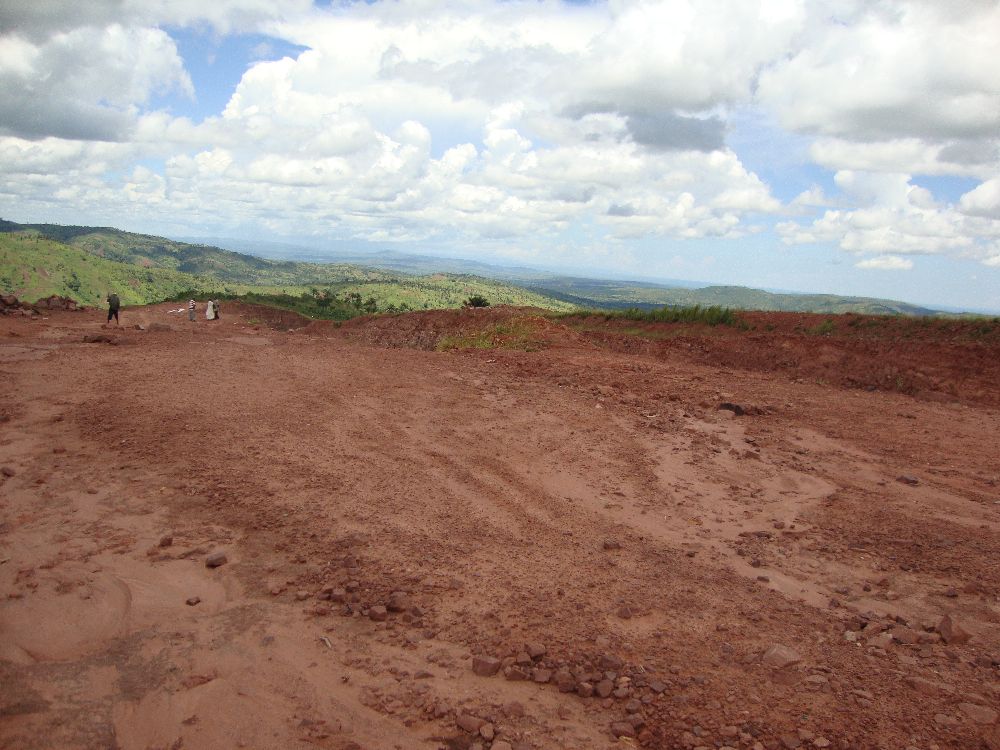
We didn't get far before we were all told to get out and walk up a hill which the minibus couldn't make due to being old and overcrowded. Less than half an hour later we were courageously taking on another gravel uphill, albeit a much gentler slope, when the Hiace gave up the ghost. Us passengers clambered upwards the hill for a bit in hope of the driver and his tout friends fixing the problem and catching up to pick us up again, but even after an hour the Hiace hadn't made a sound. So we clambered down the hill back to the Hiace to interrogate on the situation and we were told someone was coming to have a look at the vehicle. A fellow passenger who we, in our usual fashion, had nicknamed stripy-shirt man started a chat with us about the perils of travel in Tanzania and it turned out he was a Burundian guy on his way to Bujumbura as well. He currently lives in South Africa and drives a truck there, and has also lived in Tanzania and driven around Southern Africa quite a bit so he had many interesting stories to tell. This was also his first trip back to Burundi to see some family that remained there since he fled from the war 15 years ago at the age of 15. We passed the time in good spirit with him, having him translate to us what was going on too. The place where we had got stuck was a track that lined an upper bend of a newly dug but rudimentary road (or trench, that's how deep the passage was) built by the Chinese. Some vehicles passed by lower on the newer tracks and our friend and some other passengers yelled down to ask if any of them could take some of us on. We had no such luck but were instead plied with bananas from one of the trucks transporting them to Kigoma. Not long after this fruit lunch, and a little more than two hours after we first broke down, a mechanic arrived on another vehicle and got the Hiace running again in less than 10 minutes. How it looked to us, it had just run out of oil and hence the engine had cut out but I won't start speculating on the technical skills of the driver and his touts without better knowledge.


"We could have broken down at a worse spot" we both concluded.


M draws figures in the sand while Hasani inquires over progress with the Hiace. Busy times.

The Hiace sounded much healthier in any case and we bounced happily all the way to Manyovu, from where we took boda-bodas to the border after a slight debate between me and the drivers over whether two people and a big backpack can be fitted on one single boda-boda or not. We have done it before on this trip and I insisted we follow the same pattern this time around as well, but the drivers insisted back that it was against the law and that they were the type to follow the law in this town. That would certainly make this town the first and only of its kind in this sense, but as there weren't really any actual taxis around I guess the boda-boda guys could afford to follow the law here. We got on two boda-bodas in the end as the market forces were clearly against us and the other choice would have been to stay and argue the toss until the border closed. Our Burundian friend had smiled at my desperate bargaining attempt and hopped on a boda-boda of his own already 10 minutes ago, so we also had an interest in catching up with him to share transport on the Burundian side of the border.

The Tanzanian border we swept through no problem, as with the pretty little forest in between the border posts in the afternoon's setting sun. At the Burundian border our passports went through a very thorough search by the official who announced there was a problem with the visas.

Let's explain the background a bit first shall we. When we had got our passports back from the embassy in Kampala, there were these tiny little streaks of ballpoint pen over on the word 'avant' (=before) on both of our visas in the part of the visa where it says “Premier entrée avant le date ….” (or “First entry before the date...”), in our case this date was April 15th. We had been asked on the visa application form about the intended date of entry into Burundi and we had put April 15th on there, so we had taken this to mean that the officials in the Burundi embassy had stroke off the 'before' as a result, meaning we could enter anytime after the 15th. However, just to be sure that this is how the border guards would understand it as well, we decided after some hesitation that we should maybe reinforce the streaks a bit. So T had painted over the streaks with some more ballpoint pen already in Kampala, only unfortunately the shade of blue on our pen was slightly lighter than the one used by the Burundian embassy in Kampala on other parts of the visa.


Our little work of art.

So, today at the border was April 20th , and the border guard was looking at our “entry before” part very suspiciously. He interrogated us on why the word 'before' had been crossed out and stated, very rightly so, that the colour of the pen was different from the other writing on the visa. We answered that this was how we had received the visas from the embassy in Kampala (which was true in part) and that we had wondered about it ourselves as well and explained that we had been asked about the intended entry and hence with all logic it should make sense that they strike out the word 'before' exactly because we were not intending to get to Burundi until on the 15th or later. The border guard wasn't too impressed with our explanation and started pointing out instead that the visas had been issued on April 1st and therefore it would make sense that you should enter quickly, i.e. before the 15th. We dug out the phone number of the Burundian embassy (which had been given to us when we applied for the visas so we could call them up to ask about how the application process was going) and gave that to the border guard to call for himself to check with the embassy. This was obviously a slight risk because of course we couldn't be sure that the person who had issued our visas would confirm that there had been any crossing of the word 'before' in our visas in particular, either because they had exactly wanted to leave it unambiguous on purpose or simply because they would not even remember that they had crossed it out in the first place. We thought, however, that if the worst comes to the worst then at least they really have our application forms at the embassy with clear evidence on that we had intended to enter on the 15th or later. Either way, the risk was in the different shades of blue. The border guard wrote down the phone number but didn't call the embassy on the spot. He stamped our passports in for the entry, said that he would be contacting the embassy later and told us that we would have to go and extend our visas in Bujumbura in any case after three days, with additional payment of course. We insisted back yet again, pointing out that the visas had been granted for one month's stay. He didn't insist back on this issue but instead asked where we would be exiting the country and informed us that the emigration post for the same border crossing was in the town of Makamba instead of here at the border. We thanked him for the info, grabbed our passports, quickly changed some money outside, got into the taxi where our Burundian friend was waiting with some other people and drove off. We knew there was very little chance that the border guard would actually call up the embassy in Kampala, but if he did we might be in for some decent trouble on the way out. We started considering our options of exiting through some other border, hoping that the information would not travel too far.

The drive to Mabanda, the first town north of the border left all of us “foreigners” speechless, T and I because it was so beautiful and our Burundian friend Hasani (we finally got introduced formally in the car) probably because it was a very emotional moment for him to be back after all this time. Driving off from the border we saw mountains with their tops covered in the mist, sunlight beaming through somehow from the outlines. The hills and valleys in between were deep green and the road even more rusty red than those of Northern Kenya, the reddest we had seen so far on this trip. The mist made it rather eerie, as we couldn't see further than 10 metres at times once we had climbed up high enough, but it made it all even more exciting. Burundian people on the sidelines of the roads and in some small villages we drove past stared at us flat out and gave some blunt-sounding comments that we couldn't understand. A woman and man who were sharing the ride with us were talking during the most of the ride and the speech was loud, sounded very aggressive and altered in tone spontaneously. Our driver also had some character which he spilled out from the window at just about anyone who offended his driving space. Trying to interpret what was going on behind all these words I could not understand, I still sensed there was goodwill in it all, a rough and ready approach to things with some rowdy humour. I take it that is something you cannot survive without in a country recovering from decades of civil war and sporadic conflict.

We got some more examples of this in the town of Mabanda where we arrived in the early evening. We would have to spend the night here as it was too late to get transport onwards to Bujumbura. We arranged a minibus for the morning and signed in at the Hollywood motel before heading out for a dinner of nyama choma and chips at a local eatery/bar. There a drunken man sat down to our table, “Mzungu!”ed us for a while and proceeded to help himself freely to chips and meat from both mine and Hasani's plates after we refused to buy him a beer. It was done in the kind of humoristic bully attitude, clearly not wanting to offend us too much but also setting us right in our place. This got him some chuckles from the other customers at the bar as he showed off his munching to the crowd. Hasani took this very calmly whereas I loudly announced the man to be a thief and pulled my plate out of his reach in equally humoristic yet strongly “I'm not taking just any crap from you either” attitude. More chuckles followed. Sometimes it's good to be a woman in this respect, as you know you won't get into a fistfight even if you step on someone's toes without really knowing how they will react. After all, he had himself claimed I was pretty earlier so it would be a shame for him to smash my face in over a few chips, now wouldn't it?

Back at the motel, we both had ice cold showers to rinse off the rusty red crust from our skins and hair. Hasani went to see Inter beat Barca at some bar but we were too tired and just had a quick beer at the motel bar with more drunken chat from the locals. T said it reminded him of Finland and I laughed thinking that's probably why I feel at home here with the strong-minded but kind-hearted drunkards.


The bar at Hollywood Motel, Mabanda. It's too early for beer at 6am, boys!

Fun and Games in the Mud

18th April – Day 201 – Bukoba to Kigoma, Tanzania

Forget what the Lion King told you - THIS is an African sunrise!

We'd spent far too long riding buses along tarmac roads (albeit on cramped buses) so it seemed that the cosmos had decided to condemn us to a bumpy day! Unfortunately it was also an early day as the bus departed from Bukoba at 6am. Ignoring our bus ticket's instructions that reporting time was 5am, we wandered down to the bus station at 5.40 – M feeling the cold, and me feeling the effects of my stupid decision to have four beers and a curry the night before. With me taking the window seat just in case, we trundled off down the road towards Bukoba. After 20 minutes we dropped off the tarmac and from then on, “road” was a slightly euphemistic term for what we were driving on. Dirt road, potholes, puddles, psychotic driver – we had everything we needed for a true African bus experience! It all seemed to be going so well as well – the sun rose, we were covered in its warm glow, my hangover slowly disappeared, and the 100km-on-a-dirt-road-through-huge-potholes approach only sent us flying small amounts of metres into the air, probably given that the bus was jammed to way beyond capacity as always and we had no capacity for movement. It was fun.

Bags and heads in the aisle of Western Tanzania's wild and wacky buses

Eventually the inevitable happened and we got stuck in the mud. We piled off the bus one after the other without incident until M managed to put her foot in it (so to speak) and step into the deepest, stickiest mud she could find and emerge without her sandal. It took quite a bit of fishing to get it back, and quite a bit of cleaning for her to manage to see her foot again after scraping off several tons of mud with blades of grass and leaves from the roadside. Meanwhile, I flexed my muscles to go with the the men of the bus to try to push it out of the mud, got quite dirty, and eventually we were clear. Cue more psychotic driving and more mud.

Getting stuck spot #1. The truck, seemingly, had been bogged down for quite a while

Our original plan had been to go Lusahunga and try to find a bus from there, pretty much based on how it looked on the map. Just before we arrived there however, M had a brainwave and declared that maybe it would be better to go all the way to Kigoma where we could probably get better connections to Burundi. I wasn't quite convinced by her argument but we went for it anyway. And thanks to that decision, we got to have some more fun in the mud.

I'd just fallen asleep when M shook me. “We've got to get out, it looks like there's another problem”. We got out and looked at the situation – a truck had got stuck in a large mud puddle and there was a small and unlikely looking corridor next to it for our bus to go through. We'd been booted out to remove the weight for the bus to be able to get through. It didn't work. A circus ensued which I would love to describe, but it's said that a picture speaks a thousand words and I believe a video speaks a thousand pictures, so I'll just leave our little montage to explain it all instead.


By 1am, 19 hours after leaving Bukoba, we pulled into Kigoma knowing that tomorrow we'd be doing it all over again, this time north into Burundi. The joys of travel!

In the Footsteps of Mr. Livingstone

18th April – Day 201 – Bukoba, Tanzania

Despite being a junction town, it seems that Masaka isn't particularly easy to get out of. People told us that there were no bus company offices in town but that we could get a bus from the junction of the Mbarara and Bukoba roads just out of town. We set off earlyish to try and meet a direct bus to Bukoba while Uganda decided to say goodbye to us in its own way – the heavens opened as soon as we stepped out of the door of the hotel and we were soon drenched. And lost, again. The people of Masaka were treated to the same show as so many of their African brethren in the last 6 or 7 months – two muzungus standing at an intersection wondering which way to go. Common sense eventually prevailed and we hopped into a shared taxi which was going our way. The problem so far had been that we had not found two people who had given us the same answer on where exactly we should go to get the bus to Bukoba, and so we ended up standing under a tree by a petrol station with a couple of women who were waiting with their kids. A bus to the border town of Mutukula passed, I went to flag it down, and the bus sailed past. The women told us that this was the only one going in that direction. A classic African headscratching period ensued and we ended up sharing a shared taxi with the women and many others to the border. All in all, we packed 9 adults and 3 kids into a normal car. Impressive even by African standards.

A small selection of the passengers

The crossing was uneventful and after swapping shared taxis a few times we rolled into Bukoba on the shores of Lake Victoria. It's a fairly quiet and unassuming town which we walked around (in circles as always) looking for a place to stay, which we eventually found. This done, we headed off to the lake to see what there was to see. It was the first time we'd set eyes on the lake and, even if the proliferation of bars and hotels prevented us from feeling exactly the same sensation of discovery felt by David Livingstone, we consoled ourselves with the thought that Dr. Livingstone could not have taken a few photos and gone to sit at a beach bar for a cold Serengeti beer so we did exactly that. M, still on anti-Giardia drugs, had to settle for a Coca-Cola although it's doubtful that Livingstone had one of those out of the fridge when he arrived here for the first time. But anyway, I digress.

The above-mentioned lake

The above-mentioned beach bar

Aside from being home to a number of beach bars, Bukoba is also home to a Catholic cathedral which I would imagine is probably the only one on the planet which could be used as a set in some kind of futuristic sci-fi movie. It was ugly and totally incongruous with the rest of the town (and indeed with the rest of Uganda) and so like good tourists we stood and stared at it for a while and took a picture before moving on.

Delightful, isn't it?

We spent the evening swatting mosquitos and reading our Lonely Planet to Southern Africa, given that M's parents are arriving in Zimbabwe in less than 4 weeks. Slightly amateur-tourist perhaps, but Livingstone probably couldn't have done that either.

Bukoba - where you can share your bathroom with a mushroom!

Wednesday, 31 March 2010

Maasai Meeting

11th - 13th March – Days 163-165 – Handeni/Lengusero, Tanzania

I could do it every day for years on end but I still wouldn't get used to it. It leads you to call into question the utility of life itself. I am talking, of course, about the early morning wake-up. On this occasion it was about 5am as we tried to get the 6am bus to Handeni. The 6am bus, naturally, left at 8am. Sleep happened a little but then we left the tarmac and as the corrugated road rattled the fillings out of our teeth it became obvious to me that trying to sleep was pointless. As we were being thrown several metres into the air, M still snoozed happily. She manages this all the time but I'm still at a loss as to how she does it...


Attempting to impress the locals in Lengusero and probably not doing well


I like these project visits in a way that it really gives us a backdoor into the local community, a way to enter into a social sphere without doing it as a tourist. On this occasion we suddenly found ourselves chairing a meeting of several dozen Maasai herders in a small village some 40km from Handeni, none of whom spoke a word of English so we relied on Adam to translate our questions and the answers to them. We chatted for a few hours in this way, got shown some cows, received gifts of Maasai necklaces, and then, somewhat strangely, ended up having a conversation with two young guys from the village in Spanish. It was a tranquil place where life went at its own pace (i.e. slowly), kids ran around playing football with balls of rags, and people sat around discussing everything and anything at great length.


Chairing a meeting of Maasai herders - as ya do

Handeni town is nice – nothing in particular to see or do but it's a typical African small town. It also is away from any main road and doesn't see any tourist, which results in a complete lack of Jambo-men. Instead, people say hello and wave and ask how you're doing. Also, our hotel room was more of an apartment and came at a price which probably couldn't even get you a mattress on a roof in Dar es Salaam. As a result, we sat and wandered and sat some more and just took it in, before retiring to bed early. We had grand plans to get going early and get as close as possible to Nairobi as we could.


Could we succeed where we have failed so consistently before?


M gets gifts of necklaces from Lengusero village, while T is totally caught out by the camera

TIA

6th - 10th March – Days 159-163 – Stone Town, Changuu Island and Jozani Forest, Zanzibar, Tanzania (plus Disaster in Dar)


We arrived back in Stone Town and in the Abdalla Guest House to a familiar sight – fading light, hurricane lamps, and increasingly sweaty air as time went on. I surprised myself again by being happy to be back in Stone Town, however much I'd liked Bwejuu and its laid-back and let's-do-nothing atmosphere. We planned a big day out for tomorrow, aiming to go to the Jozani Forest Natural Reserve to try to see the Zanzibar Red Colobus Monkey, one of Africa's rarest.


Changuu Island's dock sees much traffic these days

The plan was grand, and the follow-through was terrible – we got up late, went to send some emails, bought postcards, wrote them, sent them, and then looked at the time and realised that it was utterly pointless going to Jozani. It would have to wait until tomorrow. I suddenly started feeling tired and told M that I needed a nap, and she said she would go into the centre and find a cafe and go to read a book. We arranged a place to meet up again in a few hours.


During this few hours, something revolutionary happened that the awoken M witnessed and the happily snoozing me missed – the electricity came back on !! I came out of my slumber to see a radically changed Stone Town – people out on the streets at night, sitting in squares eating and socialising which they wouldn't have done in the darkness of the previous 3 months. I got to our meeting point and M told me that kids had been running around laughing and screaming in the streets as the light came out, banging plastic bottles together with joy. It seems this was a moment the entire island was waiting for. I wandered off to the meeting point in a rooftop cafe, ordered a beer, and the electricity promptly cut off, to moans and cries of despair from outside. “Tonight is only a test”, we were told. “They'll switch it on again tomorrow”. Zanzibar spent another night plunged in darkness.


Next morning brought more expectation and hope for Zanzibaris, but for us it brought day trips. We'd been to an agency to book some boat to Changuu Island (which, of course, is world famous for its population of Aldabra Tortoises) and left land around 9. Our guide rattled off a few facts about Changuu before mentioning in a rather insisting way about how he didn't get paid much and relied on tips from tourists to feed his wife and kids, and brother and sisters, hint hint wink wink, but aside from that he was a relaxed and friendly guy who took us around the tortoise sanctuary on Changuu (the only island in the world outside the Seychelles where you can see these tortoises, the second largest in the world after the Galapagos Tortoises) before sailing us off to a reef and seeing us overboard armed with flippers, masks and snorkels for a touch more of snorkelling. I'm not much of a fish expert so I can't get too overexcited about seeing this or that fish but it's always a bit of fun, and we saw a couple of purple starfish lazing around on the coral. That fun, it turned out, was the beginning of a problem. Before realising that, however, we went an hour's drive away on the dalla-dalla to Jozani Forest which, true to form, we arrived at 10 minutes before closing time. This being Africa though, we were greeted at the gate by a worker there who said that he was very sorry that we had arrived too late but that if we really wanted to go we could pay overtime wages for a guide to show us around which, having come all this way, we agreed to. Ten minutes later, we ended up with this very same guy as a guide. Africa Wins Again!

M successfully avoids snakebites

It's Africa's rarest monkey. Apparently.


We got a quick tour of the place where we saw a snake which they called a “forest cobra” due to its habit of lifting its head up high when it feels threatened (and our guide attacked it with a stick Steve-Irwin-style to illustrate his point, as you do) and saw an elephant shrew wandering throuh the trees. “Now, we can go and see the monkeys” said the guide. “But they are on the other side of the main road, so we will cross over and go to look for them”. It seemed that even he was surprised when, about 50 metres into the forest on the other side of the main road, we bumped into a huge troupe of these Zanzibar Red Colobus monkeys, swinging around the trees, eating fruits and occasionally dropping the remains on us, leading to hilarious consequences when one of them fell on M's glasses. “They are showing off for you! You are very lucky!” our man in the forest said. And so it seemed – they'd jump between the trees in front of us, follow us, hang upside from their tails and stare at us, whatever they could to impress the wazungu who had never seen such monkeys before! The forest was also home to troupes of Blue Monkeys and these two species seemed to take joy in wrestling with each other. We watched them for about half an hour before another shower of fruit fell upon us and we decided that maybe it was time to hop back to Stone Town. We stepped back onto the road, and our guide in the forest said he'd come with the dalla-dalla back to town as soon as he'd got changed. We stood around for a bit and he came back out, as we told him that dalla-dallas hadn't gone past yet. “No problem, something is coming” he said. It was a private pick-up, but he flagged it down anyway. And hence for the first time since Sudan, we hitched a lift on the back of a Hilux! The guys were taking firewood from Paje to Stone Town and happily gave a lift back but dropped us off on the outskirts of Zanzibar Town. We decided to walk the 45 minutes back into town.


The road to sunburn...


By now, M's sunburn from the snorkelling adventure had intensified to a point where she wasn't too happy carrying a bag and after half an hour, when Stone Town was still not in sight, she suggested we take a dalla-dalla. “Sure”, I said, and after a minute or so one came past, touting for business. We waved it down, it screeched to a halt, and I walked off towards the door to ask the ticket guy where he was heading. At some point, however, I realised that my legs were up in the air and that I heading towards a ditch. As I landed in the ditch I turned around to realise that I'd been hit by a motorbike which had missed M by a whisker, crashed into the back of the dalla-dalla and then bounced off and hit me, leaving an irate rider, the jerrycans he was carrying scattered over the road, and me with a dead leg wandering what the hell was going on. As I clambered out I ended up in the middle of a one-sided shouting match with the motorbike rider screaming at the dalla-dalla boy, who was just trying to scoop us through the door and optimistically explaining “there's no problem, let's go”. Africa Wins Again! We got in, and got to Stone Town without any further trouble...


M meets a relative

That night was supposed to see our final departure from Zanzibar but the “Spice Islands” played their final trick on us – M was feeling a bit rough after her encounter with the African midday sun, and didn't fancy taking the overnight ferry back to Dar es Salaam. “It's OK, you can take the fast boat at 9.30 tomorrow, you will be in Dar by midday!”. This was useful as we'd arranged to meet another 1% Fund project guy, Adam, in Dar early next day. We had dinner and went to find another place to crash for the night. 8.30 came, we dragged ourselves down to the port, and asked for 9.30 ferry tickets. “But there is no 9.30 ferry today... there is one at 12.45 though!”. Great. More sitting around with bags (although this did involve a great burger for me and a big salad for M so hey, who's complaining?) and we charged up to the pier for the boat which was waiting for us at 12.30. “This is not your boat. Yours is not here yet.” Africa Wins Again!


Signposts on Changuu Island. The prison was never actually used


A bit over an hour later we were off, with me frantically dishing out text messages to Adam, keeping him up to date with our situation. Our minds were put at ease by the fact that our ferry had a showing of “Indiana Jones and the Last Crusade”, but within two and a half hours we were on the road again, as Adam had told us that he was waiting for us at the main bus station about 10km out of town. We hoped to get there and hop on a bus to Handeni where the project was based. Unfortunately we landed in an enormous traffic jam caused by (as we eventually found out) a bus which had ploughed into the back of a minibus, and these 10km took us well over an hour to cover. We met Adam, realised that there were no buses to Handeni left, and tried to look for a place to stay. We apologised profusely to Adam, especially given that he'd taken time off work and left his base in Morogoro very early that morning and had been waiting for us at the bus station for about seven hours due to our repeated disasters. “Oh, it's fine, don't worry about it!” he said, without a hint of sarcasm. “I know how it goes with these connections, traffic jams, boats, buses... it's no problem at all...”. We'd have to spend the night in Dar es Salaam and take a bus up to Handeni the next morning. My mind floated off for a second as I thought about how a European would react to waiting seven hours for someone to show up. Africa Wins Again – The Flipside!

Little Ado About Nothing (at all)

3rd -6th March – Days 156-159 – Bwejuu, Zanzibar, Tanzania

It wasn't quite that windy.

We were up bright and early, kicked ourselves out of bed on account of the sweaty sheets not encouraging a lazy lie-in, and headed off to the bus station to go and see somewhere else. The coast of Zanzibar Island is dotted with small fishing villages which themselves are dotted with resorts and guesthouses, and we pretty much picked one of them from the map and headed off. The ride was scenic although we were half asleep for most of it. It's an attractive island and the slow pace of life in the main town was taken even more seriously in the countryside – people wandered or cycled around, sat in the shade, or worked lazily in the fields. We arrived in Bwejuu, rocked up at “Mustapha's Place” the first place we saw a sign for, and went in to discover that we were the only guests there. It was getting towards being low season, they said, and so they wouldn't normally be full at this time of year, but the fact that it was complety empty was a result of the lack of electricity. We explained to them that mzungu tourists like their cold beer and air conditioning but it was still amazing for us to see what a huge effect a simple lack of electricity has had on visitor numbers – come on wazungu, satellite TV and air-con aren't THAT important!!!


The hustle and bustle of downtown Bwejuu was almost too much for us

We were joined almost immediately by a guy who offered us a snorkelling trip, M's eyes lit up and I could see the lazy morning I'd planned for the following day come down in flames. Within a short time, it was decided – we'd get up early for the trip, pay over the odds for it, and meet the guy at the beach for the trip. Later in the day a Danish woman and her daughter arrived and we had a few chats with them but the conversation was rather Scandinavian in nature (i.e. it didn't flow very well, fast, or easily) and I drifted in and out of it. I think I need to do nothing at all for a few days to get the energy levels back up. Bwejuu seemed like a good place to do that – it was a small, quiet village with nothing much to do aside from sit and lie around reading books and having a warm beer or two. The two guys who work at the place, Mohammed and Ali, are friendly and a guy drops by in the evening to hang around. He's half Zanzibari, half Somali, he tells us. He's a nice guy too – his face has some Somali features to it, he speaks English with a partly African and partly London accent and tells us tales of his days as a fisherman off the Somali coast before the war broke out. He tells us of his disgust for the effect that qat has on the Somali lands and is interested to hear of our impressions about Hargeisa. It's a relaxed and nice evening, and for me the only souring event was being destroyed at chess by M (yet again) in the evening. There is a generator here but they switch it off at around 11pm, the fan goes off, and it's another sweaty night.


The idyllic (.....or at least quasi-cleanish) beach in Bwejuu.

We'd walked around the village just after arriving and it was clear to see the effect of the long power cut yet again – most of the resorts in town were empty, some had closed down, and the few that remained open didn't have many customers – aside from the Danes the only other wazungu we've seen are a family on holiday at the beach. In many places, a tourist crash like this would result in the few that arrive being relentlessly hounded by touts and TCSs (tourist-crap-salesmen) but these aren't in evidence in Bwejuu (just as there were very few of them in Stone Town) and this increases my liking for the place even more. I get the feeling that this is a place which tourists have discovered and which residents have adapted to, rather than exploiting the situation ruthlessly as has happened in so many places. Zanzibaris, I salute you...


It was only "Kilimanjaro" but there was nothing else cold. Life is a struggle.


The snorkelling wasn't bad – the underwater life isn't as impressive as it was in Hurghada and the visibility wasn't as good – but it's relatively rare enough to see life underneath sea level that some colourful fish flitting around is always nice to see. They were well outnumbered by sea urchins and corals that looked disturbingly similar to extremely large brains. The afternoon was as unproductive as I hoped – lying around in another one of the low-key resorts where I found Louis Theroux's “Dark Star Safari” on a shelf and read the beginning of it, where the author traces much the same route as we did on the beginning of the trip, through Egypt and Sudan. More of the same later at another resort run by a German guy who ran over to the generator-owning neighbouring resort with several iceboxes and filled them with ice every morning to keep his beers cold. More of the same the next day at the same place. Eventually we managed to get moving back to Stone Town at 4pm. Nothing much accomplished but in my mind that was needed...


3 days in Bwejuu - a summary


The Bwejuu award goes to the guys who work at Mustapha's whose names are Mohammed and Ali, for naming their two cats Cassius and Clay. Genius!


Ali (left) and Mohammed (right) flanking M (rear) and Clay (front). Thanks guys!

Who needs Electricity???

2nd-3rd March – Days 155-156 – Stone Town, Zanzibar, Tanzania

Zanzibar Town's rather understated ferry port seen from "Mercury's" bar, which is surely not trying to cash in on Zanzibar's most famous son

I'll be quite honest here – I'm not a fan of tourist, beach places and I didn't really expect much of Zanzibar. I didn't really like Lamu all that much and as the ferry pulled up to the docks, I was expecting more of the same. After getting a Zanzibar stamp in our passports for some reason, we stopped for a drink while we worked out where to go, and eventually set off looking for a place to lay our heads for the night. As we wandered around the small, winding streets of Stone Town (the old Swahili quarter of Zanibar Town, the main town of Zanzibar Island – surprisingly), the place grew on me very quickly. There were tourists around and the place had a definite beach-town feel, but it was somehow very different from Lamu. I didn't at all get the feeling of being an animal in a zoo who is expected to buy everything from everyone and where anyone who offers to help is just looking to make something. People said hello and smiled, gave us pointers and welcomed us. I don't know why but it just had a completely different feel to Lamu, even though technically they were quite similar. As we got (unsurprisingly) lost in Stone Town's alleyways, a guy offered to help and guided us to the place we were looking for. It was full, and so he took us to another one, which was also full. His third suggestion had space for us and we settled into the sweltering room.

Typical (above) street scene in Stone Town

It's the hot and rainy season in this part of Africa and the air is oppressive enough as it is, but Zanzibar has an extra problem – in December of last year, the electric cable under the sea from the mainland snapped and Zanzibar Island, which has no power stations of its own, was plunged into darkness. It's been that way ever since even if a few places have generators. I suppose it creates a largely similar scene to what it must have looked like a century ago – merchants did business at night in the flickering light of candles and hurricans lamps, and fans and air-con are distant memories. While it creates a nice atmosphere, it's been rather tougher on the island itself as Western travel companies have cancelled all of their bookings. There are still a fair amount of tourists around but everyone says that it's far less than it normally would be at this time of year. Taking the positives out of this situation as they can, hotel owners are using the slump to carry out renovations on their hotels, waiting for the electricity to come back on. No-one really seems sure about when this will happen though. As often happens in Africa, people take the situation as it comes and are dealing with it in a way that just wouldn't be possible in Europe...


A Cathedral. What else to say about it ?

Stone Town is one of those places where you just wander around and take in the atmosphere in the small cobbled streets. You eat whatever you can find (because of the lack of fridges outside of the expensive hotels, a lot of restaurants have scaled down their menus drastically and the drinks are warm. It's alright though and we don't really mind – it does some good to get away from the comforts of life sometimes (and in my opinion the more the better). The evening was a lazy one having a cold drink on the seafront, getting lost once again and eventually finding our way back to the “Abdalla Guest House Annex” for a shower in the dark (if you can't see that you're still dirty then it doesn't count, right?) and a pretty sweaty night.


...little did we know we'd be just in time for the Eid-al-Moulid celebrations! Hurrah!

The Abode of Peace

26th February - 2nd March - Days 151 - 155 - Dar Es Salaam, Tanzania

All seemed well on our return to Dar es Salaam for about four minutes until it dawned on us that our one remaining camera had somehow been left on the bus. A few phone calls to the bus company left us empty handed and so, with our Somaliland Nokia phone being of a slightly basic model, we were left with no photographic equipment whatsoever.


The Kigamboni ferry prepares for yet another 4 minute crossing

We were determined to give Freda a good send-off anyway and put the camera issue on the back-burner. In the shadow of a ferocious looking storm, we sailed/took a tuktuk/trekked off to the Kigamboni peninsula on the other side of the bay for a day at the beach. In one of the more surprising events of the day, the jet black clouds which had been chasing us for several hours suddenly decided to change course and our afternoon in the sand was spent in glowing sunshine. The atmosphere was only dampened when a bit of a commotion went up and it turned out that a girl had just arrived in the area after having her arm knifed by fishermen who were trying to mug her further up the beach. Not wanting to crowd her out as she was already being helped by many people (including the barman who ingeniously disinfected the wound with a generous helping of Johnny Walker) we stayed our distance a bit as she was helped into the car. The wound wasn't huge but there was still quite a bit of blood – as M pointed out her distress was probably more fear than pain but it was still a reminder of what can happen in broad daylight. We've been so fortunate so far on this trip not to have had any trouble at all that it's easy to become complacent sometimes. We made a mental note of this as the barman's friends drove the girl off to get medical help somewhere.


Generic view of Dar es Salaam from the sea #58823294 (featuring Fish Market)


The final part of Freda's send-off was a trip to the suburbs to an Ethiopian restaurant which I'd been dreaming of ever since our last one with Tom in Nairobi. It was pretty good all in all but the kitfo was probably the best we've had, including in Ethiopia. So to all raw-meat fans out there, “Addis in Dar” is a great place to chow down, even if it does cost 5 or 6 times more than what it would in Ethiopia itself. We got an early night and, when Freda sailed out the door at 3.30am for his early morning flight from Nyerere International Airport, we gave him a rather anticlimactic farewell, half asleep as we were. I vaguely remember wishing him a good trip but that's about it. We tried to make up for it with text messages through his long trip home, attempting not to rub it in too much by mentioning the Finnish climate at this time of year...


"Addis in Dar", a paradise for lovers of raw meat and unleavened pancake dough.

The next day, we had a mission – get a new camera. For this we headed out to the posher suburbs of Dar es Salaam where we aimed to find shopping centres, hopefully to get what we were looking for. After several underpopulated and uninspiring places totally devoid of any character (and camera shops), we were engaged in conversation by two girls taking a lunch break who asked us our opinion on a new marketing scheme they'd drawn up for their company. The pointed us towards another shopping centre where they said we'd probably have more luck and, after far too long agonising over what to get, we finally emerged with a new camera. It got dark, started raining, and we finally injected a bit of life and character into the day by going to eat some Ethiopian again. The kitfo was still as good. This was our final farewell to Dar es Salaam as we packed up, got up early, and headed towards the docks to get a ferry over to the legendary Zanzibar Island.